

KERALA
Survival to Selfhood: Trans Women Entrepreneur Shares the Struggle Behind Success
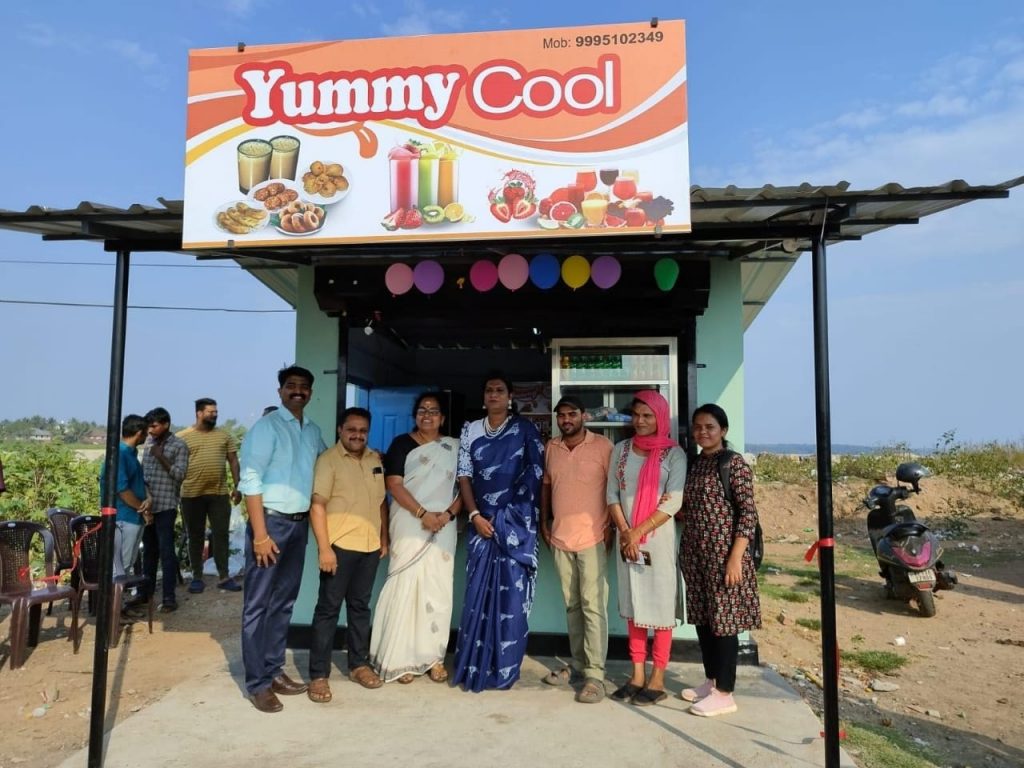
Across Kerala, transgender livelihood initiatives have increasingly moved from the margins to visible public spaces, supported by evolving policies and institutional frameworks. Among these initiatives stands Maya’s story one shaped not by sudden transformation, but by sustained effort, repeated resistance, and a quiet determination to live with dignity.
Maya, a transgender woman entrepreneur from Kannur district, represents a generation that came of age before transgender identities entered public policy discourse. “Ten or twelve years ago, society didn’t accept people like us,” she reflects. “We were always hiding, afraid of our families and afraid of the public.” Long before welfare schemes, cultural festivals, or legal recognition, transgender persons like Maya navigated life in isolation, often suppressing their identities to survive.
Struggle for Identity
Born as the only son in her family, with two elder sisters, Maya’s early life was shaped by expectations she could not fulfil. Even before she fully understood her identity, she sensed her feminine nature but suppressed it out of fear. Formal education ended at the eighth standard not due to lack of ability, but lack of interest and emotional safety. Like many transgender persons, Maya moved through a series of informal and low-paid jobs: bag making, painting work, working as a room boy in a lodge near Anandha Bhavan in Kannur.
Twelve years ago, Maya made the decision to live openly as a woman. That choice came with a cost. “I lost many family members. Some don’t invite me to weddings even now,” she says. The period following her gender affirmation surgery was particularly painful. “Even my family said, ‘It’s not him, it’s her.’” Yet over time, dialogue replaced conflict. Today, Maya visits home, supports her ageing mother who has diabetes, and bears responsibility for her medical needs. “I buy all her medicines,” she says quietly.
Collective Beginnings: Nanma Kudumbashree and ‘Nice Chips’
Maya’s journey did not begin with a cafe. It began over a decade ago, at a time when transgender identities were rarely acknowledged in public life. “Ten or twelve years ago, no one accepted us,” she recalls. “We were always hiding afraid of families, afraid of society.” It was during this period Kudumbashree came as a support. Kudumbashree told them “You start a special Kudumbashree.” That a group of ten transgender persons came together and formed Nanma Kudumbashree, believed to be Kerala’s first transgender Kudumbashree unit.
Pooling together ₹50 each, the group took a leap of faith. With the support of Kudumbashree and a ₹3 lakh Mudra loan from Syndicate bank, they launched a small chips-making unit called ‘Nice Chips’. Operating out of a rented house where all ten members lived together, the unit grew steadily. Kudumbashree became a crucial market link. “They told us, ‘Make as much as you can we will take everything,’” Maya says.
For Maya, Nice Chips was more than an enterprise it was an identity. “My name was Sumesh before. ‘Nice Chips’ is what turned me into Maya Sumesh,” she says quietly. The unit took them beyond Kerala too, to melas in Jaipur and Delhi, giving them exposure, confidence, and recognition.
Then came a series of blows. The COVID-19 pandemic disrupted operations. Members dispersed during lockdowns. Personal tragedies struck the group, including the loss of community members. Around the same time, Maya underwent gender affirmation surgery and had to step back to recover. Gradually, Nice Chips wound down. “When it stopped, I felt a deep sadness,” Maya admits. Yet survival demanded reinvention.
Survival Demanded Reinvention, A Trans Woman at the Harbour
In 2022, Maya made a decisive shift toward independent entrepreneurship. Within a one-month period, she established two livelihood enterprises: A cafe near the Ayikkara harbour, and a cafe inside a college campus.
The harbour cafe came first. The shop allotment process traditionally prioritised the fishing (Mukkuvar) community. Despite this, Maya applied. “One official said, ‘People like you must grow in this society. You need a job to move forward,’” she recalls. That moment of institutional empathy changed her trajectory.
The harbour cafe was inaugurated by the District Panchayat leadership and received media attention. Today, it remains her more stable source of income, operating in a high-footfall area that remains active late into the night. Maya employs staff there and consciously maintains respectful relationships. “If we don’t show attitude and treat them like siblings, we get respect in return,” she notes.
Encouraged by this success, Maya pursued a long-held dream to run a cafe inside a college. “I studied only till the eighth standard, but I always loved colleges,” she says. “Having a shop inside one was a dream.”
A Dream Inside a College Campus
Reaching Brennen College was not easy. Applications stalled, files did not move, and resistance surfaced both bureaucratic and social. Maya and her supporters approached political offices, followed up persistently, and even travelled to Thiruvananthapuram multiple times. “If we falter once, we shouldn’t stop,” she says.
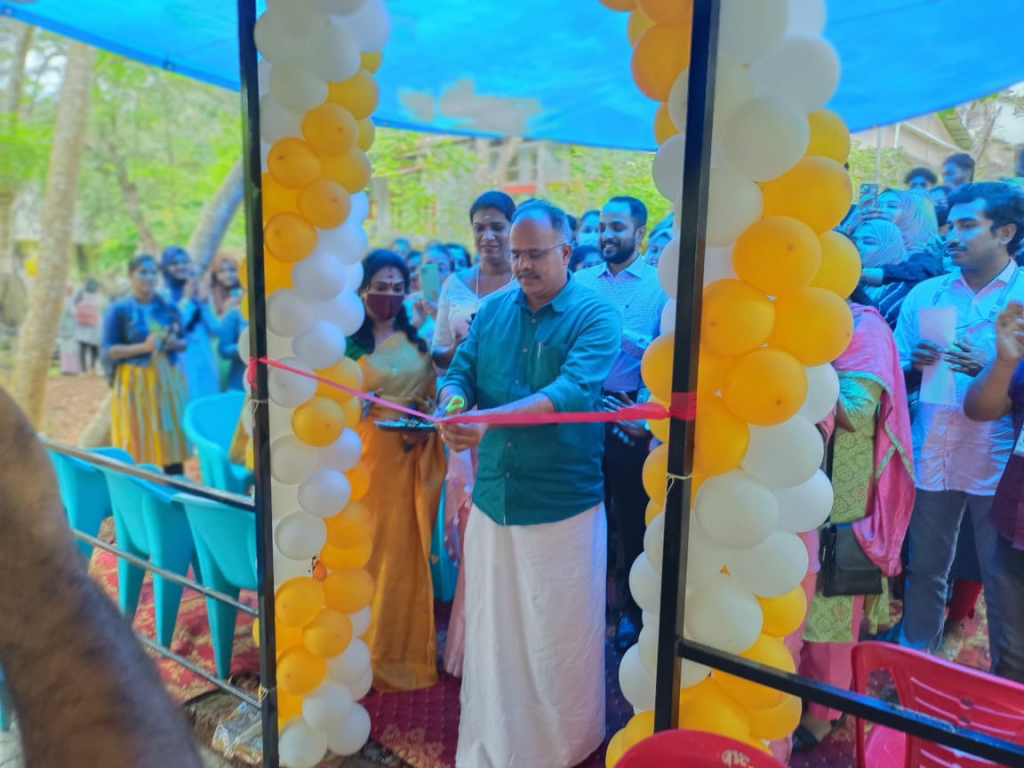
Eventually, approval came. The college provided land, but construction costs had to be borne by Maya. With limited funds, support arrived in fragments from a person from Social Justice Department and other organisations through roofing sheets, equipment, and furnishings. Slowly, the cafe took shape. While the cafes were started without any formal training, the chips unit was established after receiving training support
Inside the campus, Maya confronted her deepest fear: acceptance. “I went there with a lot of fear,” she admits. “How would students and teachers see me?” What followed surprised her.
“At first they called me ‘Aunty’. Later, they called me ‘Chechi’,” she says. “That’s all we need.” For a transgender woman who had endured years of misgendering, being addressed with respect became her greatest achievement. “After all the surgeries and struggles, if someone calls us ‘Eda’, our heart breaks. But that never happened there.”
“If I move forward, others should not be pushed back”
The college cafe operates alongside an existing Kudumbashree canteen. To avoid affecting their livelihood, Maya consciously limits her menu to snacks, tea, coffee, and fast food items like pizza. Despite encouragement from teachers to serve breakfast, she declined. “I have to understand their struggle too,” she explains.
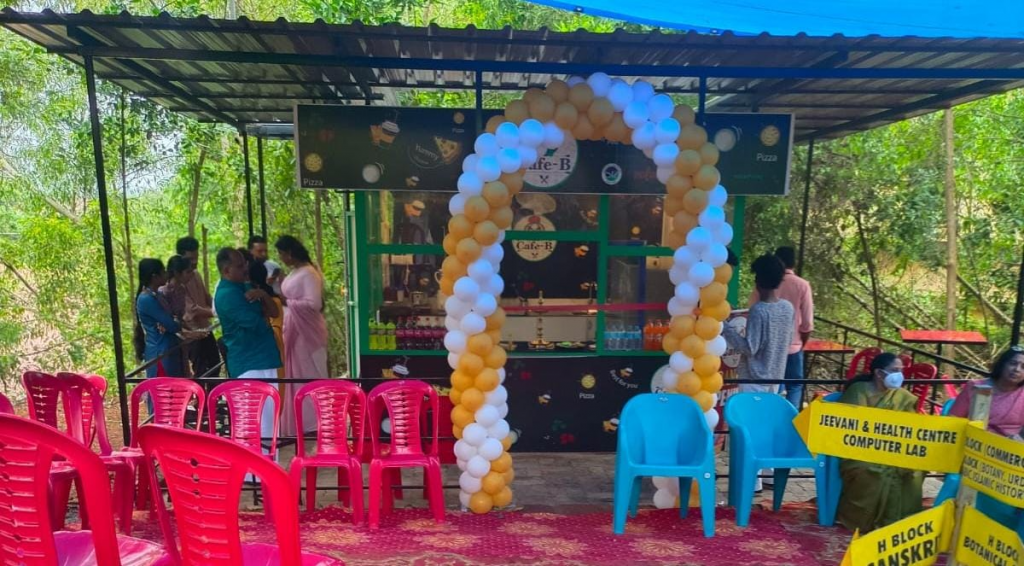
Economically, the college cafe is fragile. Holidays, strikes, and vacations affect income. Some days bring profits of less than ₹1,000; on others, Maya covers losses from her own pocket. Still, she holds on. “The college is an emotion for me. Otherwise, I would have closed it long ago.”
Her monthly expenses remain high ₹12,000 in house rent, medical follow-ups following surgery, staff wages, and daily operational costs. Yet she continues, driven by purpose rather than profit alone.
Beyond Cafes: Supporting Tribal Livelihoods
Alongside her cafes, Maya works with an NGO supporting tribal communities. She markets products like black pepper, turmeric, and honey sourced directly from tribal producers. “They get a fair price, and we get a small profit,” she says. This initiative reflects her belief that livelihood should uplift others as well. Her responsibilities extend beyond business. She supports her ageing mother, manages medical follow-ups after surgery, and continues to search for land under a Corporation housing scheme.
“A house of my own is my biggest dream,” she says. “I am 39 now. I want that security.”
Maya openly acknowledges the role of the Kerala government in her journey. Financial assistance for surgeries, after-care support, livelihood schemes, and broader policy recognition have made survival possible. Yet, she remains realistic.
“Our society has changed maybe 80%. The remaining 20% will always be there. We can’t react to everything.”
“So many initiatives came after this government. The support has been very good,” she notes.
“There are policies, funds, and visibility now,” she observes. “Earlier, we had nothing.” While challenges remain, Maya believes institutional support has significantly improved over the years.
Reviving ‘Nice Chips’
Despite her current enterprises, Maya’s heart remains tied to Nice Chips. “That unit was my identity,” she says. “I must start it again somehow.” She dreams of reviving it as a live, order-based unit, reconnecting with Kudumbashree and the public.
Reflecting on her journey, Maya offers a quiet but powerful insight:
“If you really want to live for yourself, you will succeed. Obstacles give value to success.”
Maya is clear that public resistance was never the defining feature of her journey. During the years she ran Nice Chips, the response from the public was encouraging, and the products were well received. The cafe, too, did not face direct opposition. Reflecting on her personal experience, she notes that overt hostility was rare. For over a decade now nearly ten to twelve years she has lived openly, wearing sarees and asserting her identity with confidence.
At 39, Maya continues to move between her two enterprises both started in 2022 within a month of each other balancing survival, responsibility, and aspiration. Her story stands not as an exception, but as evidence of what becomes possible when resilience meets institutional support, and when dignity is allowed to take root in everyday work.
Report Compiled by: Nishma Shibin, Enumerator, DDU-GKY RC, NIRDPR, HYDERABAD
From Graphic Design to Bridal Artistry: A Multi-Skilled Creative Entrepreneur
Abeel Aamy’s professional identity cannot be confined to a single title. “I’m not just a makeup artist,” she says. “I’m an all-rounder musician, graphic designer, painter.”
creativity accompanied her from an early age through drawing, music, and visual design. Over the years, these interests evolved into a diversified livelihood spanning graphic design, fashion styling, bridal makeup, costume work, and artistic exhibitions.
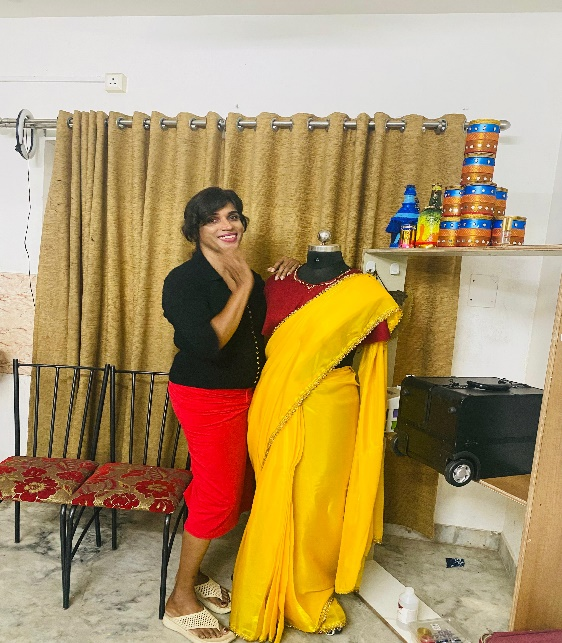
Her life reflects continuous learning, calculated risk-taking, and adaptation within competition.
Early Career in Design
She completed her pre-degree in 1993 to 94. After a brief period assisting at her father’s workshop a common family occupation she pursued computer design studies around 2000, entering the field of graphic design at a time when it was still emerging in Kerala.
By 2005, she was working as a graphic designer at a major wedding invitation manufacturing firm in Kochi, earning ₹15,000 per month a respectable income at that time. She describes the period as professionally formative.
“Graphic designers were rare then. DTP was common, but graphic design was different. I used Photoshop and CorelDraw. My designs had something special.”
It was during this phase that her employer encouraged her to pursue fashion designing, recognizing her visual sensibility. She completed a one-year fashion designing course (2006 to 2007) while still employed an investment that later shaped her independent career.
Studio Ownership and Creative Expansion in Kochi
In 2009, she resigned and started her own studio in West Kochi. The studio combined graphic design and photography, but it gradually became a space for aesthetic experimentation.
“I had interest in makeup even before. So when clients came for photos, I started doing their makeup myself.”
This informal integration of services became the foundation of her livelihood in beauty and styling. Social media particularly Facebook during its peak enabled visibility. She began working with well-known photographers such as Arshal and Aashiq Maahi and entered the Malayalam film ecosystem.
She worked as a makeup artist in the acclaimed Malayalam film Mayanadhi and later acted in a Tamil film in 2021. She also assisted fashion designer Sanjana Jon in North India for a year, gaining exposure to national-level fashion circuits. Prior to that, she had collaborated with designer Dalu Krishnadas as a stylist.
These experiences expanded her technical repertoire styling, costume arrangement, bridal aesthetics, and fashion shoot conceptualization though much of her makeup expertise was self-developed.
“If you ask where I learned makeup, I learned it myself from YouTube. But whatever I’ve done, I’ve left a signature on it.”
Identity and Professional Continuity
She formally embraced her gender identity in 2015, though she describes her gender expression as something she had been aware of since childhood.
Her transition did not mark a break in her professional trajectory; rather, it coincided with expansion into bridal makeup and styling. In 2017, she won a state-level bridal makeup title Queen of Bridal which increased her invitations to conduct seminars and product demonstration workshops across Kerala.
“I’ve given classes from Thiruvananthapuram to Kasaragod.”
Ironically, she reflects with humour that training others contributed to a saturated market.
“A lot of makeup artists came out,” she laughs. “It came back to me.”
Peak Growth and Uncertainty
By 2018, her bridal makeup career was financially strong. She was charging ₹25,000 to 30,000 per engagement and had enough confidence to invest in a combined makeup studio and parlour space in Edappally, a prime commercial area in Kochi.
She paid advance rent and planned to formally launch in 2019. However, operational delays coincided with the outbreak of COVID-19. The business could neither open nor close fully fixed costs accumulated without income.
“I couldn’t start the shop, and I couldn’t close it. I was just pouring money into it.”
The total financial loss reached approximately ₹18 lakhs. Restarting would have required an additional ₹25 lakhs risk she chose not to take.
Loss and Market Competition
Post-pandemic recovery was further complicated when her Instagram and Facebook accounts were hacked, erasing her portfolio including work done for well-known personalities such as Manju Warrier.
“Everything went wrong during COVID. All my work was gone.”
In an industry where visibility determines bookings, digital presence is crucial. Her reduced social media activity influenced partly by personal and family considerations limited promotional reach in an increasingly competitive environment.
“About 3,000 makeup artists come out every month in Kochi. There are so many institutes now.”
Current rates have dropped to ₹10,000 to15,000 per engagement, reflecting both market saturation and post-COVID price corrections.
She is currently undergoing hormone therapy, which adds recurring financial burden. Previously, certain medicines were available free through local government facilities in Ernakulam, but those supports have reportedly been discontinued.
“Maintaining the body like this is not simple. It’s a risk anyway.”
Post-transition, extended family relationships have continued, though with varying degrees of comfort. Housing insecurity a documented issue among transgender persons affected her earlier, particularly in rental markets.
Currently, she resides in a house provided by a long-time friend, covering only utility expenses. This informal support stabilized her after the COVID losses.
“I don’t want to depend on anyone. My livelihood is important.”
Vision for the Future: Integrated Creative Wellness Space
While she is cautious about reopening a standalone studio, she envisions a multi-service model combining boutique, parlor, studio, and wellness components.
“It’s not enough to just look at beauty. Now people want healthy beauty.”
She recognizes that dermatological knowledge, holistic treatment models, and aesthetic services must integrate in order to remain competitive in urban Kerala’s beauty market.
“What you see now is just the beginning.”
A Multi-Talent Identity Beyond Livelihood
Her artistic journey extends beyond design and makeup. She studied Carnatic music for eight years and Hindustani music for three years, played instruments, and worked in devotional music programs associated with Potta Ashram near Chalakudy and in Mumbai during her school life. Painting, music, digital design, and costume work are not separate careers for her they are interconnected expressions of a single creative identity.
“Whether in makeup or costumes, I leave a signature.”
Painting has remained a consistent interest for her. Alongside makeup and designing, it forms an important part of her creative identity.
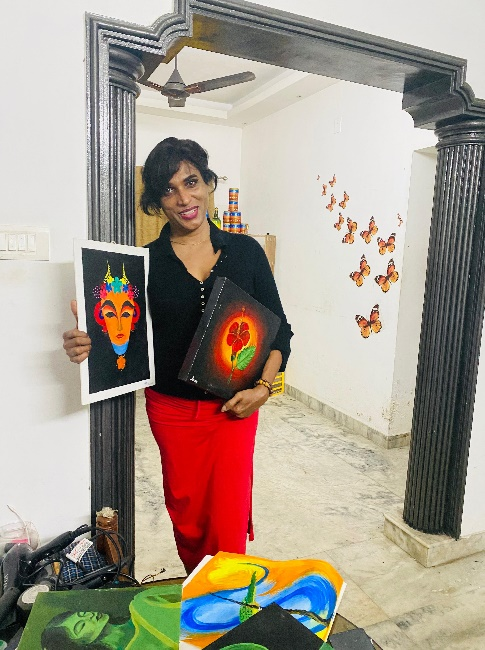
“I’ve always been interested in painting,” she says.
While makeup and costume designing are her primary sources of income, she also participates in exhibitions and local melas whenever opportunities arise. Some of these events are organized under Kudumbashree, including the Bhakshya Vibhanana Mela held in Fort Kochi. At the Fort Kochi exhibition, she displayed a small collection of her paintings. However, her inventory was limited.
“Many of the artworks I painted earlier were ruined. Now I have only around 10 to13 pieces.”
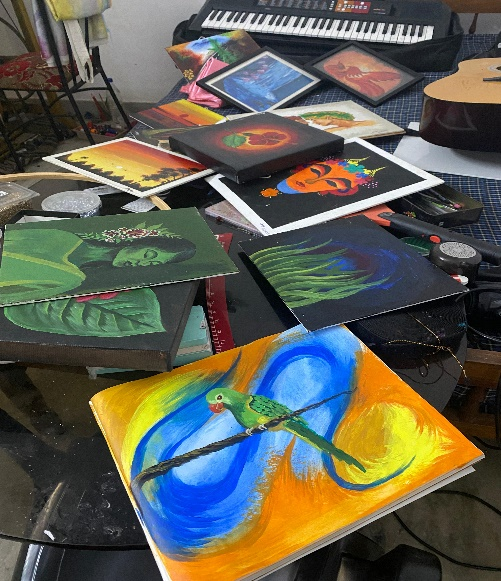
She does not create paintings only for exhibitions. Painting is an ongoing practice for her. Whenever she finds time between professional assignments, she works on new pieces. When an exhibition is announced, she selects from her available works and presents them.
In addition to paintings, she also makes handmade ornaments. The intention during such melas is not only to display artwork but also to sell products. However, in some instances, she has not been able to bring her ornament collections due to limited stock or other constraints. These exhibitions provide occasional income and visibility. Although not a major source of earnings compared to makeup, they offer a platform to showcase her artistic work and connect with new customers.
Report Compiled by: Nishma Shibin, Enumerator, DDU-GKY RC, NIRDPR, HYDERABAD
Varsha Nandini: Sustaining a Community Canteen as Livelihood and Social Space in Palakkad, Kerala
Inside the Civil Station complex in Palakkad, housed in a public building under the Public Works Department, a small canteen opens every morning by 7:30 a.m. By noon, around forty to fifty people would have eaten a simple, complete meal rice, sambar, rasam, fish curry, vegetables, curd, papad, and pickle priced at ₹60. Once the rice prepared for the day is finished, service comes to a close.
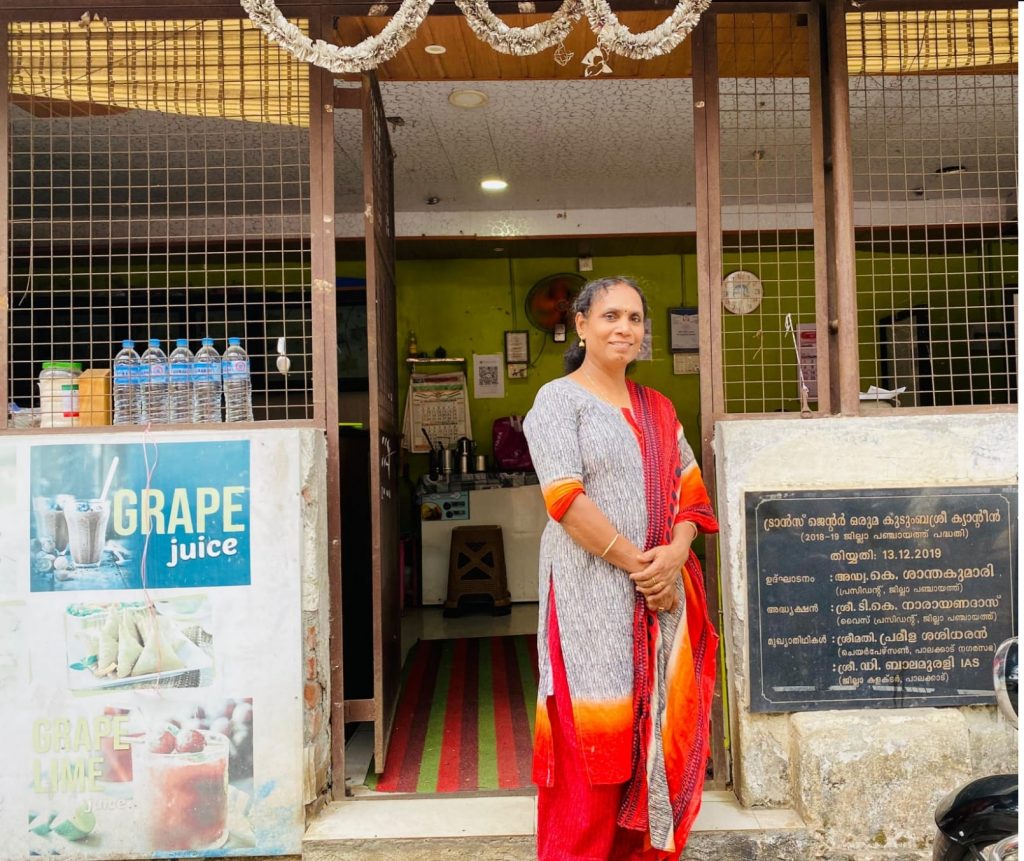
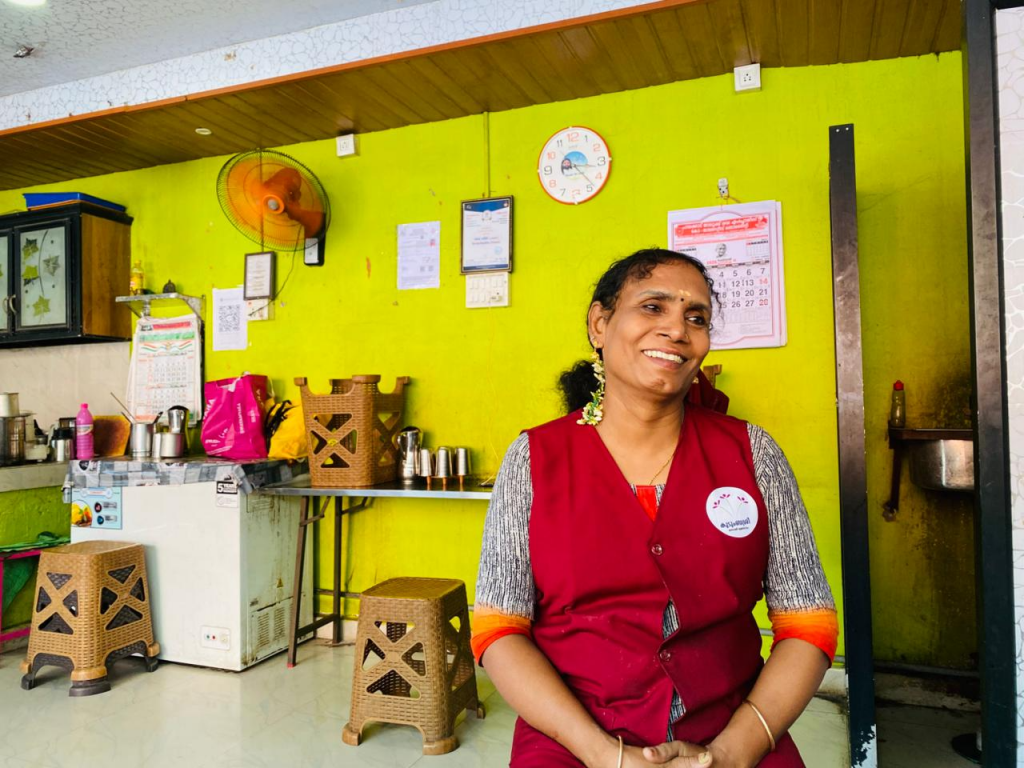
The canteen is run by Varsha Nandini, a transgender entrepreneur who has been operating the space continuously since 2018. Established within the Civil Station, the canteen has become a familiar reference point for visitors and staff alike. If one asks for the transgender canteen, named “Oruma,” almost anyone in the complex is able to point the way.
Entry into Entrepreneurship through Kudumbashree and Local Government Support
After returning to Kerala around 2015, Varsha and in 2017, she became part of a transgender-exclusive Kudumbashree group, consisting of five members. Recognising the group as a special collective, the District Panchayat sanctioned ₹5 lakhs to establish a canteen, coordinated through Kudumbashree and the Social Justice Department.
“I bought everything at first with that five lakhs. Now it’s been seven or eight years naturally, things are worn out,” Varsha says, referring to the refrigerator and kitchen equipment that have been in continuous use since the canteen began.
This initial capital was used to purchase all basic equipment stoves, vessels, refrigerators, and furniture. Over time, with seven to eight years of continuous use, the infrastructure has aged, and maintenance has become a recurring concern. Varsha manages electricity, water, gas, and household expenses for herself and her mother, who lives with her. Daily expenses for food supplies remain high due to market prices, and vegetables and fish are purchased fresh every morning. Varsha cooks and serves the food herself. On an average day, she prepares around ten kilograms of rice. From this, the daily income generally ranges between ₹500 and ₹600. For the enterprise to be financially viable, she estimates that at least 100 meals would need to be sold per day.
“Honestly, it should be 100 people for the business to be profitable. But we manage.”
There is no subsidy attached to the meals, despite the canteen being associated with Kudumbashree. Prices have increased modestly over timefrom ₹50 earlier to ₹60 now largely due to rising input costs. The canteen operates from a government-owned building. Rent is payable to the PWD and currently stands at ₹4,500 per month but she has been unable to pay the rent till now, there is no permanent tenancy guarantee.
“To be honest, I’m not entirely satisfied. My main tension is paying the rent. But I’ll keep going as long as I can. If this closes, I’ll look for another job.”
Footfall and Business Challenges
Footfall has fluctuated over the years. Varsha observes that customer hesitation is not uniform, but it exists. Some customers walk in easily; others pause after reading the board outside.
“Everyone is there. But when it’s someone like us, there is a small hesitation for some people.”
She is clear that the situation worsened after the COVID-19 pandemic. Reduced public movement, changes in food habits, and economic pressure affected small food enterprises across the board. For transgender-led businesses, these challenges were layered onto pre-existing social hesitation.
“After COVID, business really went down. That’s the real problem.”
Varsha does not frame this as an individual failure but as part of a broader pattern affecting informal and small enterprises.
Navigated Through Multiple Livelihoods
Before settling into the current enterprise, Varsha lived and worked in several cities Around 1993-94, including Pune, Mumbai, Goa, Hyderabad, Bengaluru, and Mangaluru. These movements were shaped by the social realities of the time and the absence of structured livelihood options for transgender persons.
“Back then, it was the Hijra culture.”
Government support for gender-affirming healthcare and livelihoods was not available during those years. Varsha financed her medical procedures independently, earning through the options accessible at that time. She speaks about this period without dramatization, situating it within the broader socio-historical context of the 1990s and early 2000s.
“Then, there weren’t schemes. Now there is support. That makes a difference.”
During the COVID lockdown, when the canteen had to shut temporarily, Varsha adapted again selling lottery tickets and snacks from a small cart nearby, earning close to ₹1,000 per day.
“If this wasn’t here, I’d still survive. I’ll always find some work.”
For Varsha, entrepreneurship was not limited to the canteen. Her interest in running her own enterprise developed earlier through agricultural work.
“For me, the real inspiration was to start my own business. Before this, I was doing farming.”
With support from the Malankara Mar Thoma Syrian Church, and particularly from Father Mathew Nilambur, she was given access to 50 cents of land for cultivation. On this land, Varsha began farming activities, including turmeric and ginger cultivation.
Although the initial phase of farming resulted in financial loss, she continued working in agriculture and experimenting with crops. One season did not yield the expected results, and she notes that last year’s turmeric cultivation was not successful. The most recent crop cycle has now concluded. Despite these challenges, her efforts in agriculture were formally recognised. She received awards for turmeric and ginger cultivation
Livelihood, Education, and Cultural Work
Alongside managing the canteen, Varsha has consistently invested in education and skill development. In 2022, she completed her Plus Two through the equivalency programme, securing 82% overall, with full marks in Malayalam, English, and History. She received a scholarship under the Mazhavillu project and considers education an important part of her long-term growth.
When asked whether she intends to pursue further studies, Varsha responds thoughtfully:
“Yes, I am interested. But I can’t do it full-time. I can only manage to come and study on Sundays.”
She expresses particular interest in History, a subject in which she scored highly.
“I like History. I have good marks in it. History is interesting. Once you learn it, it just stays in your mind.”
Beyond academics, Varsha is actively engaged in cultural and artistic expression. She writes poetry, prayers, and songs some inspired by travel, faith, and reflection during the years following her surgery. She has received recognition for poetry and music, securing high grades in writing and performance-based cultural assessments. Although her work has not yet been published, she hopes to compile her writings into a book in the future.
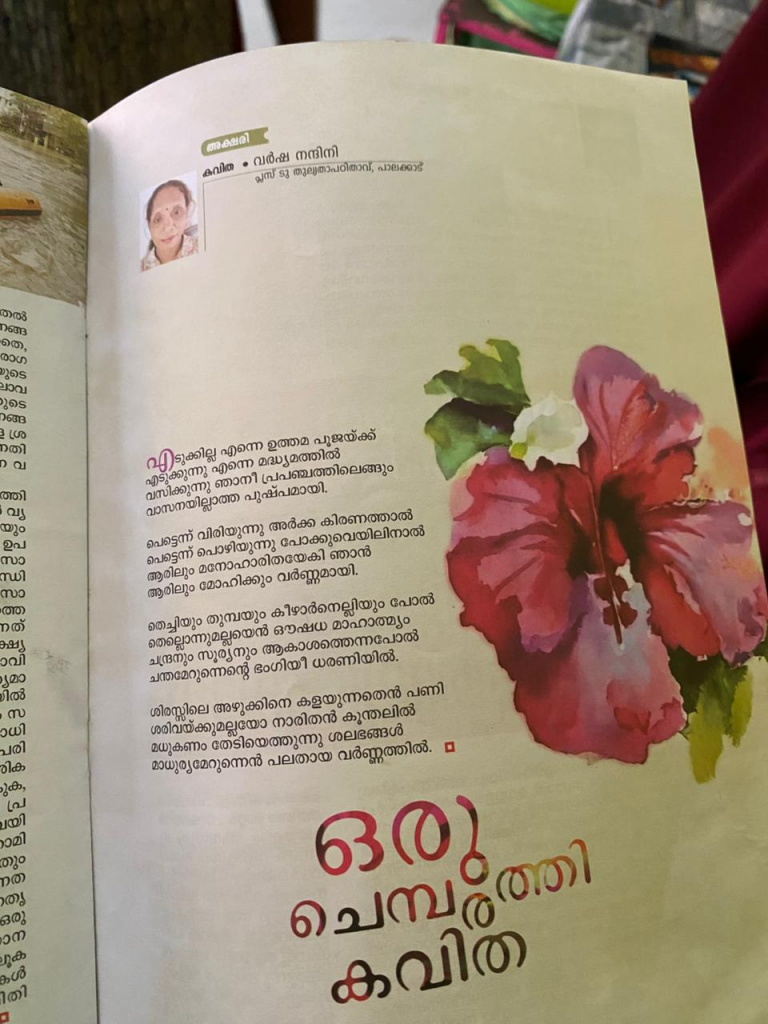
“I’m still writing. I want to compile my poems into a book someday.”
She has also participated extensively in theatre, cultural performances, and awareness programmes. As a member of the drama troupe Mazhavillu Dhwani, which staged productions such as Parayan Maranna Kathakal (Stories Forgotten to be Told). Varsha performed in colleges, universities, medical institutions, and public forums across Kerala and outside the state, including Goa. One of the organisations associated with their work was Dhwaya in Ernakulam. The group did not have a fixed performance base; instead, they staged programmes in different institutions and public spaces depending on where they were invited.
Income from cultural programmes such as Margamkali, Oppana, cinematic dance, and folk forms supplements her canteen earnings, particularly on weekends. The troupe earned modest performance fees, usually around ₹1,000 per show.
Through these activities, Varsha integrates livelihood, education, and cultural engagement into a continuous process of personal and community development.
“We went wherever we were invited.”
Awards and Recognition
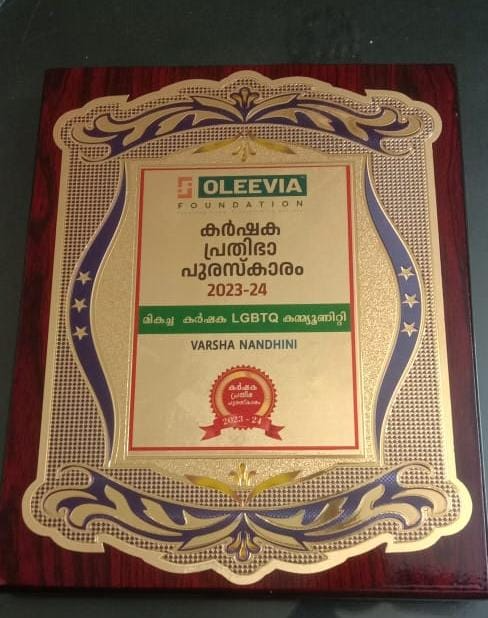
Varsha has received multiple recognitions, including a district-level social service award (2020) and a state award for Best Transgender Entrepreneur (2022). The state award was presented to her by R. Bindu. She has also been recognised for her agricultural efforts.
While recognition brought visibility to her work, it did not address structural concerns such as housing security, access to capital for expansion, or long-term financial sustainability.
Informal Care Systems
Within the transgender community, Varsha plays a role that extends beyond formal titles. She describes a family-like structure where some individuals take on caregiving and mediation responsibilities for those who are estranged from their biological families or experiencing distress.
“For them, we have a mother figure.”
She speaks of “children” within the community not as dependents in a legal sense, but as relational bonds shaped through care, guidance, and mutual responsibility.
Skill Training and Institutional Engagement
Varsha has participated in extensive training programmes covering skill development, communication, food preparation, self-employment, and creating enabling environments. She is aware of schemes such as DDU-GKY and shows interest on it.
She is a member of the Kerala Women’s Development Corporation and participates in meetings and consultations. Housing as an Unmet Structural Need. Despite years of continuous work, Varsha does not own land or a house. Housing remains her most urgent aspiration.
“If I had ten cents of land and a small house, that would be enough.”
Outlook and Future Directions
Varsha continues to operate the canteen, explore cultural training possibilities, and consider further education and she expressed her interest towards DDUGKY training. When asked whether she is a member of any political party, Varsha clarified that she is not formally associated with any political organisation. She stated that she does not consider herself an active political person. However, she expressed that she tends to support whichever government or party extends support to the transgender community, since the current government has been supportive, she supports them.
“If I fall, the children coming behind me will lose hope.”
When asked about her future plans, she mentioned that she would like to start dance classes, but only if she can organise them properly. She is also open to conducting group dance sessions. Her daughter has recently begun learning dance, and she hopes to do something related to dance along with her. However, she feels that she needs proper space for that, mainly a house. Although she has many ideas and wishes to start something new, she also feels that her current place is safe and gives her a certain status, so she is cautious about making any changes.
Report Compiled by: Nishma Shibin, Enumerator, DDU-GKY RC, NIRDPR, HYDERABAD
Elaneer Express: A Modest Endeavour with Resolve; Lessons in Economic Empowerment from Malappuram
Along a roadside in Edarikode, near Kottakkal in Malappuram district, Elaneer Express operates as a small neighbourhood juice shop. It serves tender coconut water, sugarcane juice, shakes, tea, and light refreshments. In its appearance and daily functioning, the shop is similar to many others in the area, and functions in line with common roadside retail practices, which the owner views as integral to its sustainability.
For Anna Mary, this shop is not about visibility or symbolism. It is about living with dignity, earning an honest livelihood, and exercising the freedom to shape her own life.
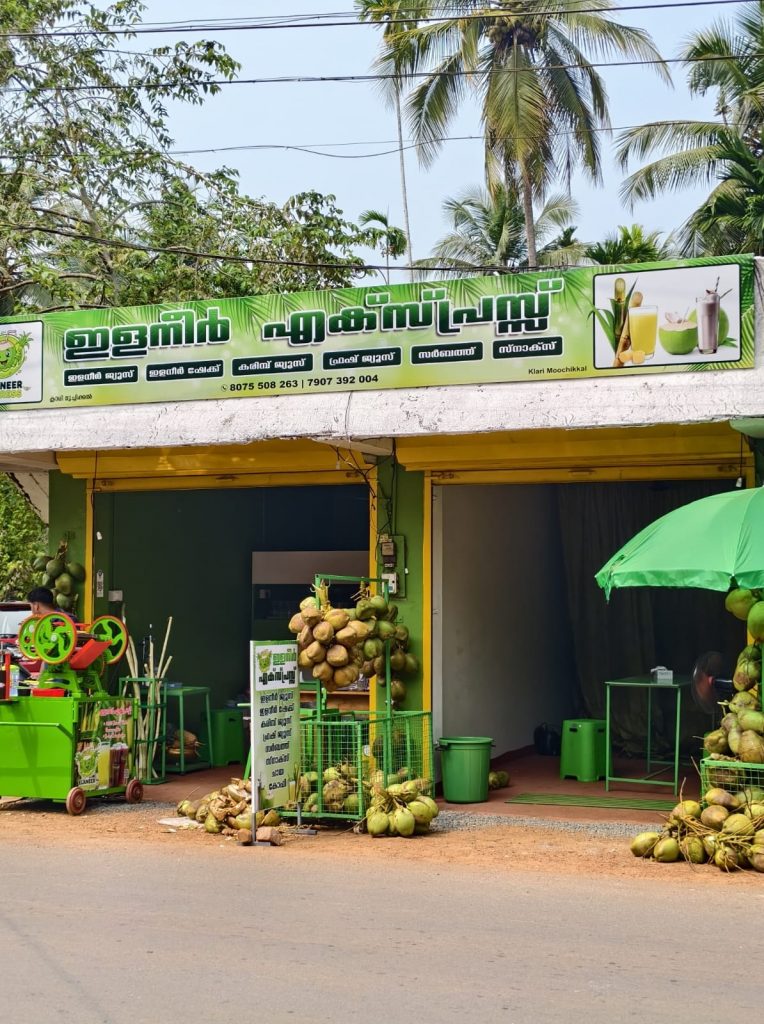
Anna Mary, a trans woman who has identified herself as such since 2015, started Elaneer Express on 10 November 2025, along with her partner. The two have been living together for nearly two years and run the shop as equal partners. “We are together,” she says simply. “We run the shop as a team.”
Building Business from Experience
The shop was not born out of ambition for recognition or inspiration, but out of practical experience and shared effort. Anna Mary’s partner, Transmen had earlier worked in a juice shop in Kottakkal and learned the trade there. Using that knowledge, they purchased a sugarcane machine, a juicer, and gradually set up the space themselves. The total investment came to around ₹3 lakhs, a significant amount for a small household.
What makes this initiative notable is not the scale, but the self-reliance behind it. To raise funds, Anna Mary sold her gold, her partner sold a ring, and they took small loans through digital platforms. She also received support of ₹30,000 from the Mar Thoma Church’s Navodaya project. Despite being aware of government schemes for transgender entrepreneurs, Anna Mary chose not to pursue them.
“The procedures are exhausting,” she explains. “And if tomorrow the shop has to close, people will say I took government money and wasted it. I don’t want to hear that.” This decision reflects a deeply held principle: ownership without obligation, and dignity without dependency.
Today, the shop operates from a rented building, with a modest monthly rent of ₹4,000. The building was initially in poor condition, requiring substantial renovation. The income from the shop is stable “not big, but enough,” as Anna Mary puts it. It supports their daily needs and gives them control over their time and work.
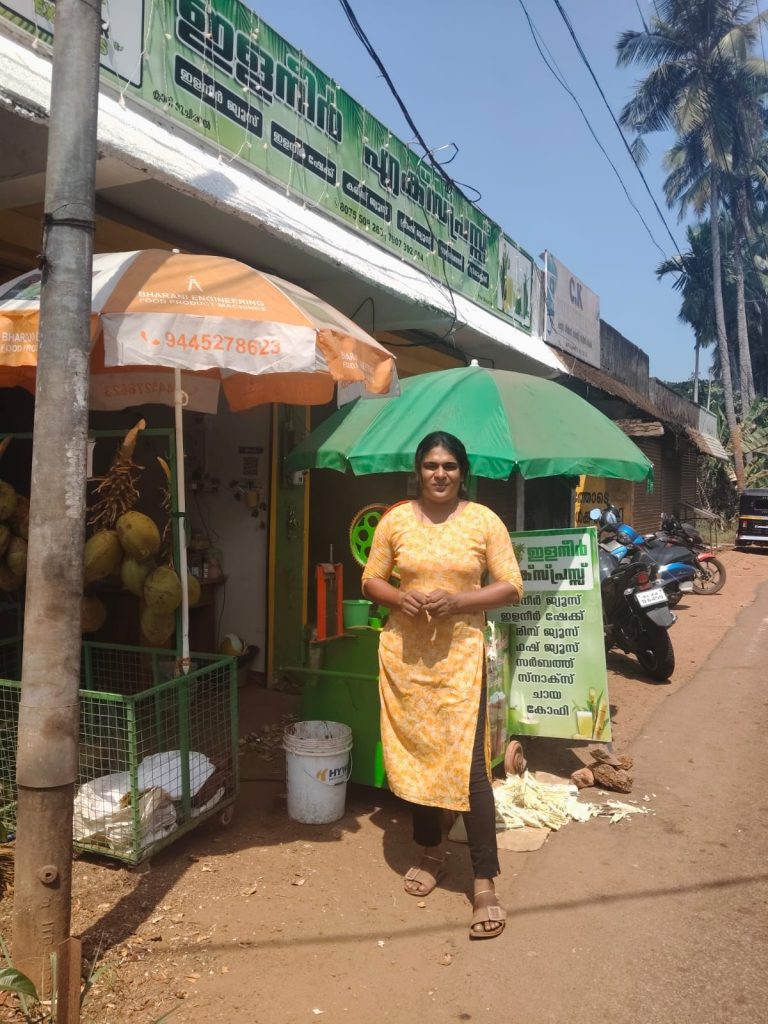
“The biggest difference,” she says, “is that we are not working under anyone. We can open and close the shop when we want. No one rules over us.”
Multiple Roles for Steady Life
Alongside the business, Anna Mary works one day a week as a Community Link Worker under the National Health Mission, assisting members of the community at the Tirur Government Hospital. Selected through a formal interview process, she receives a small monthly honorarium and considers the role a way to give practical support.
Navigating Public Spaces
Public response to the shop has evolved over time. Initially, there was curiosity and hesitation. A trans woman and a trans man running a business together was unfamiliar in the area, which Anna Mary describes as relatively orthodox. But the scepticism did not last.
“Once people saw our behaviour and our work,” she says, “they understood we are just like anyone else, trying to live decently.”
Today, customers come regularly. Some may hesitate, some may stare, but Anna Mary has learned not to internalize it. “People might look and talk. I ignore it and move on. That has become my attitude.”
She also acknowledges the importance of local support systems. Political participation, community connections, and simple everyday solidarity have helped create a sense of safety. Even institutions like the nearby mosque have extended everyday kindness, allowing her access to basic facilities when needed.
Choosing Normalcy Over Visibility
Yet, despite being part of a marginalized community, Anna Mary is clear about one thing: she does not want her livelihood to be reduced to a label.
“I don’t want my shop to be known as a ‘transgender shop’,” she says. “I just want to live like any other human being.” This is why she has declined media features and social media promotions. Online comments, often cruel and dehumanizing, affect her deeply. “I’m a very sensitive person,” she admits. “I can’t handle that emotional stress.”
Livelihood as a Conscious Choice
In the past, she has engaged in sex work and begging experiences. For her, the transition to running a small business was not just economic; it was philosophical.
“I’ve heard many people say no one gives us jobs,” she reflects. “That is true. But if we have the mindset even if we buy something for ten rupees and sell it for twenty we can survive.”
She does not frame her choices as morally superior, but as personal. “Living like this is also a choice,” she says. “Each person chooses for themselves.”
Education remains another quiet aspiration in her life. After completing her degree in 2017, Anna Mary returned to academics after a long gap and is currently pursuing an MSW through IGNOU. For her, the degree is not about employment alone. “I wanted to have a qualification,” she says. “When people ask, I want to have an answer.”
Looking ahead, Anna Mary and her partner plan to open another branch of Elaneer Express in Ernakulam, her hometown, with support from her sister and brother-in-law. The plan is cautious, family-based, and grounded much like the first shop.
Today, Anna Mary describes her life without grand claims. She speaks of peace, partnership, and quiet satisfaction. “Even though it’s a small shop,” she says, “I am happy that I started something of my own.”
In that statement lies the essence of her journey not a story of spectacle, but of choice, effort, and dignity earned day by day.
Report Compiled by: Nishma Shibin, Enumerator, DDU-GKY RC, NIRDPR, HYDERABAD
From Childhood Passion to Livelihood: The Story of Tripthi Aquatics
Hrithik, along with his partner Tripthi, is recognised as one of the first trans entrepreneur couples in Kerala. Their livelihood is built through persistence, small-scale enterprise, and shared responsibility. The ornamental fish tanks that now line their home are not just business assets; they represent a long personal journey that began in childhood. In a rented house, rows of fish tanks line one side of the room. Inside them, brightly coloured guppies move through clear water, carefully bred, sorted, and maintained. The setup is modest but carefully managed aeration systems checked regularly, breeding tanks separated, feeding schedules maintained with precision.
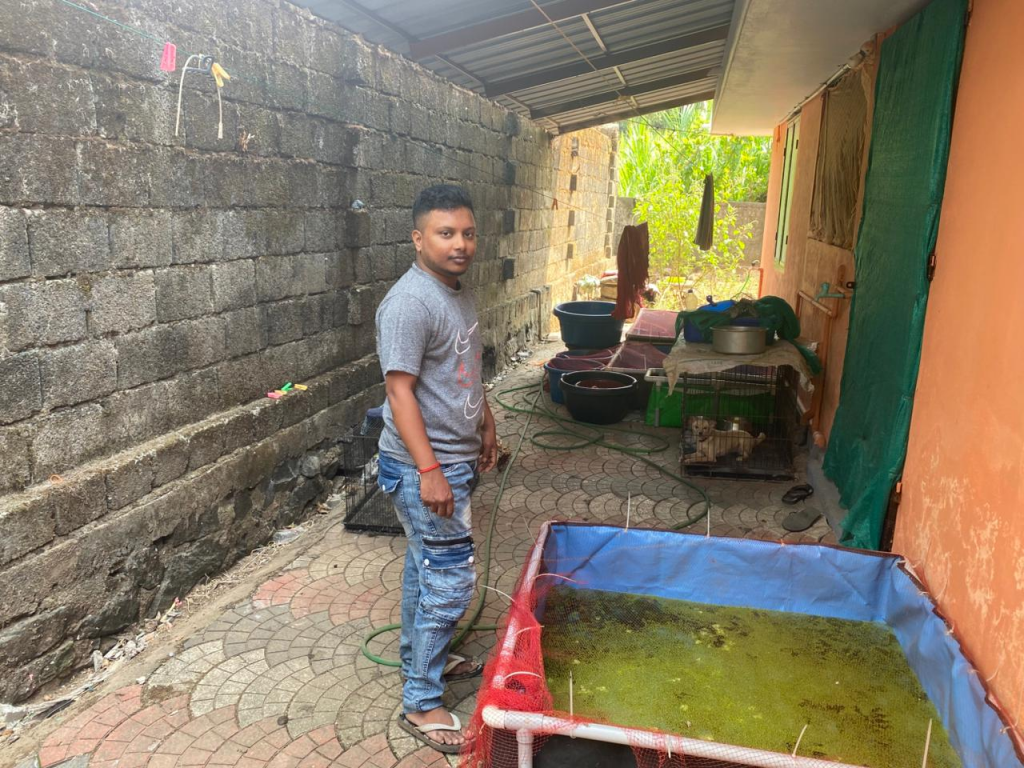
For him, ornamental fish breeding is not simply an income activity. It is an interest cultivated since childhood.
Making of a Childhood Passion
Raised largely between relative’s homes, he did not grow up with stable personal space. His parents were separated, and much of his childhood was spent in his grandmother’s house. Financial and spatial constraints meant that personal hobbies were not easily accommodated. Yet, fish fascinated him.
“Back then, I used to get guppies from the stream and keep them in empty bottles. They looked beautiful. That’s how it started.”
Even when discouraged from maintaining tanks at home, the interest remained. The idea of nurturing small living systems observing breeding patterns, colour variations, and survival stayed with him through adolescence.
He completed his BBA in 2014 from a government-aided college in Kollam in 2014. During his college years, he began taking tuition classes on weekends to support his expenses.
With those earnings, he purchased his first proper glass tank.
“More than the money, it gave me happiness to do something I loved.”
“The fish business has always been a part of my life.”
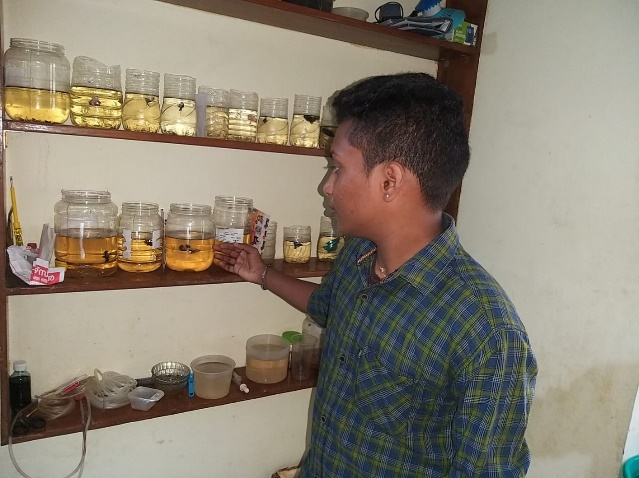
This marked the transition from hobby to structured engagement. He began breeding guppies intentionally, Small-scale sales to local buyers and sharing fish with neighbourhood children followed. The activity generated modest income, but more importantly, it built happiness in self-employment. After his degree, he worked various jobs as a supervisor in a supermarket and as an office staff member at Sun Direct.
Identity and Accessing Support
Around 2016 to 17, he began actively exploring his gender identity. Until then, he had limited exposure to terminology or community networks.
Through peer connections, he engaged with community-based organisations supporting gender-diverse persons in Kerala, Sahayathrika in Thrissur. Access to shared experiences and information played a crucial role in self-understanding.
“I didn’t even know the term ‘transman’ before. Meeting others helped me understand myself.”
He began medical transition in 2019. The process involved multiple procedures and considerable expense. However, state-level transgender welfare policies implemented during that period enabled him to receive reimbursement for surgical costs, along with post-operative nutritional assistance.
“The policy came at that time. It helped a lot.”
Employment and Career Shifts
Before focusing fully on self-employment, he worked in supermarkets and later became an outlet manager at a food counter in a shobha mall in Thrissur. Before surgery, Hrithik had informed his employer.
“He told me, as long as I did my job well, he didn’t care. Everyone is human.”
Report Compiled by: Nishma Shibin, Enumerator, DDU-GKY RC, NIRDPR, HYDERABAD
